
One call instead of a calling list
Start by asking whether a local storm damage roofing contractor is available. Missing shingles or a new leak are useful details to mention when discussing your needs.
Storm damage roof repair connections • South Jersey
Call to check availability for storm damage roof repair in your ZIP code.
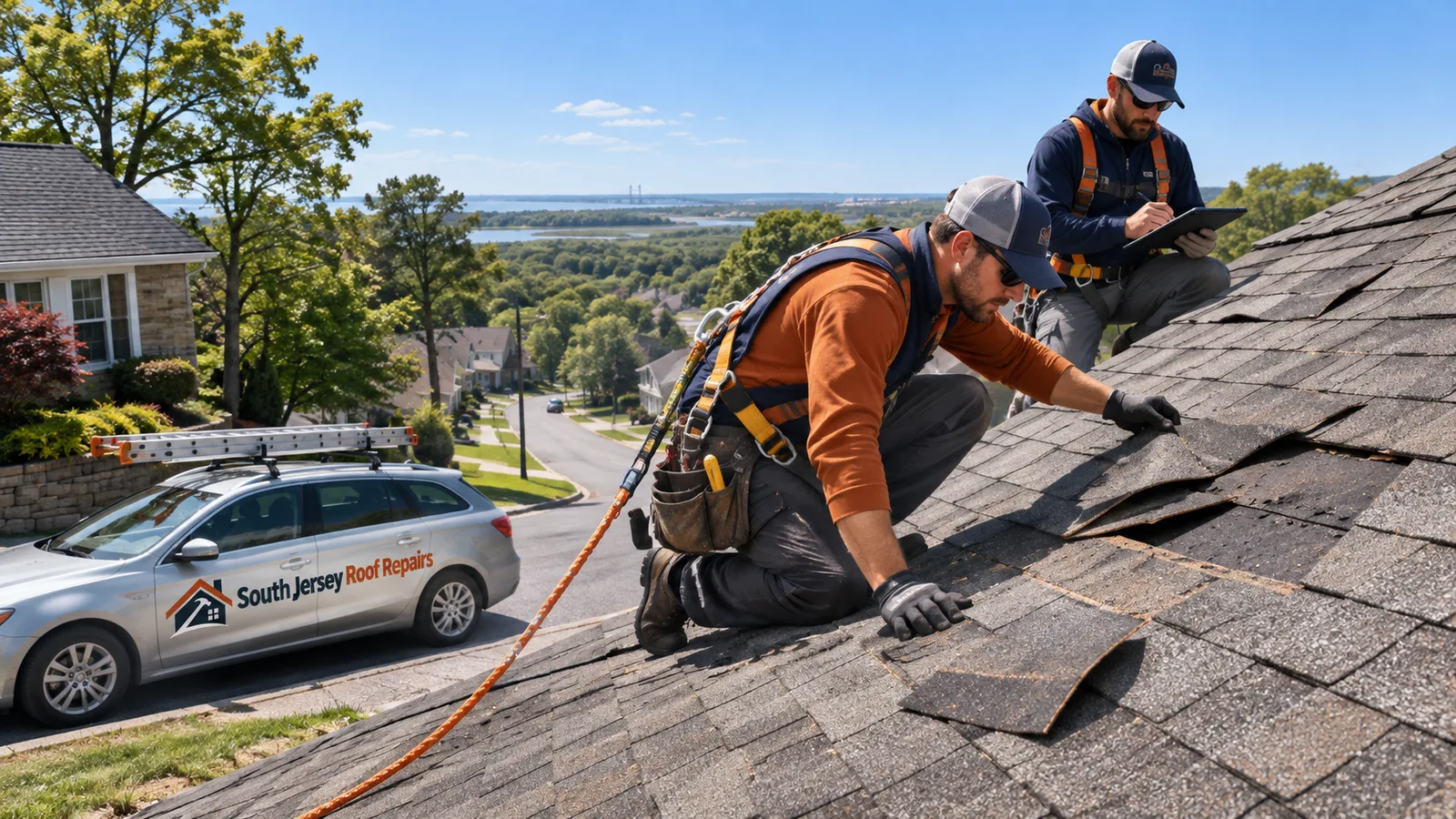
Storm damage roof repair in South Jersey starts with identifying what the weather damaged and how water could enter the roof assembly. Missing shingles are easy to spot, but creased tabs, loosened ridge caps, and damaged flashing can be less obvious. A ceiling stain may appear some distance from the opening because water can travel along framing before reaching the interior.
Wind can lift shingle edges and break their seal, leaving tabs vulnerable to tearing during another gust. Hail can bruise asphalt shingles, dislodge protective granules, or damage the reinforcing mat. Scattered granules alone do not establish hail damage. A roofer needs to consider the impact pattern, shingle condition, and related marks on roof components.
South Jersey's coastal storms and nor'easters can combine strong wind with driving rain. That combination makes roof edges, ridge caps, wall intersections, and flashing worth checking even when the main roof slopes appear intact. On exposed shore properties, wind exposure also matters when the contractor selects replacement materials and fastening methods.
A thorough inspection looks at the roof covering, penetrations, valleys, and accessible attic areas. Where shingles are missing, the contractor checks the underlayment and decking rather than simply covering the opening. Soft or deteriorated decking needs attention before new roofing is attached.
For isolated damage, a repair may involve removing damaged shingles, replacing affected underlayment, and fitting compatible shingles into the existing courses. Broader damage, brittle shingles, or a roof that cannot be repaired without damaging surrounding material may lead to a discussion about roof replacement and installation. The contractor should explain the evidence supporting either recommendation.
Our referral service helps homeowners check availability with South Jersey roof contractors who handle storm-related roofing work.
If a contractor is available, you can discuss repair options directly and decide whether to proceed.
Start by asking whether a local storm damage roofing contractor is available. Missing shingles or a new leak are useful details to mention when discussing your needs.
Ask about wind-lifted shingles, hail marks, or water entering near a chimney. The contractor can explain how an inspection would establish the repair scope and what access the work may require.
Contractor availability varies by location in South Jersey and the work needed. If someone is available for your area, discuss your roof type, storm exposure, and access before arranging an assessment.
The contractor provides the quote and proposed scope. You can ask which materials would be replaced, how concealed damage would be handled, and what warranty terms apply before agreeing to work.
Have your property ZIP code ready when you call. If a contractor is available, describe what changed after the storm.
Discuss inspection arrangements with the contractor. The roofer assesses damaged shingles and related roof components, then checks for signs that water has reached the underlayment, decking, or attic. Safe access and weather conditions affect how the inspection is performed.
The contractor explains whether the damage supports a localized repair or a larger replacement. Ask for a written scope identifying materials, flashing work, debris removal, and how additional deterioration discovered during removal would be addressed.
If you proceed, the contractor arranges the work with you. Damaged materials are removed as needed, exposed areas are checked, and replacement components are installed. Before the job is closed out, review the completed scope, cleanup, and any photographs documenting concealed repairs.
Ask about local contractor availability and, if available, discuss inspection arrangements and safe next steps for your roof.
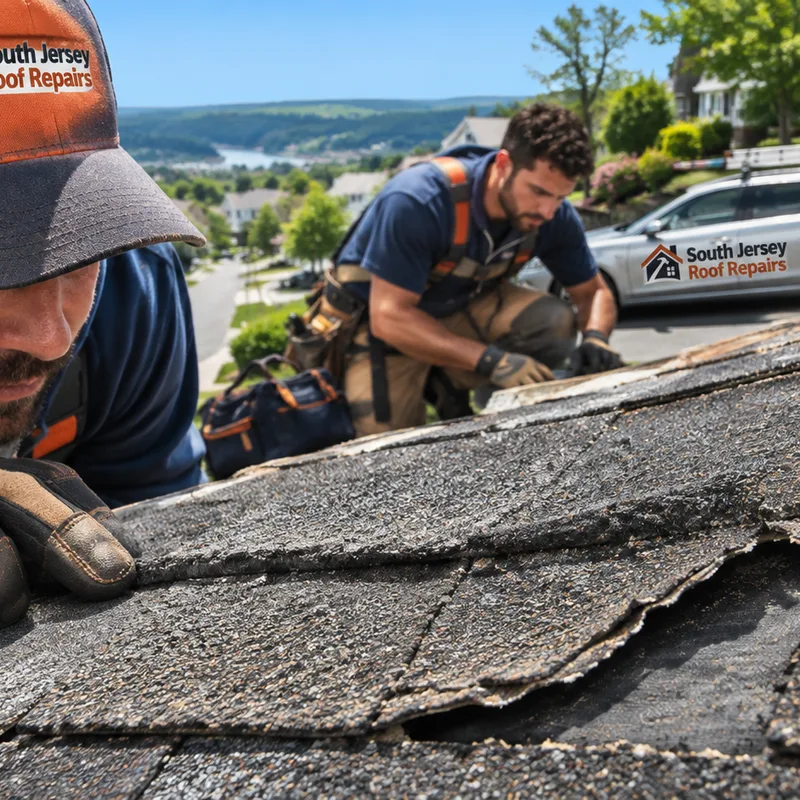
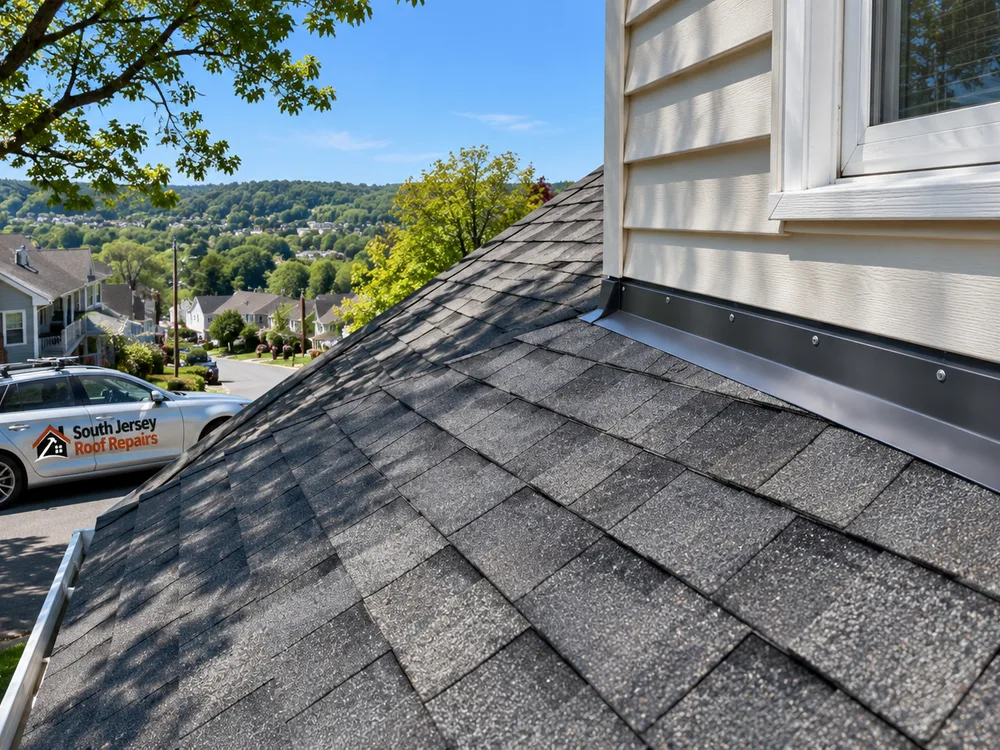
Missing shingles warrant assessment even when there is no visible interior leak. Underlayment may temporarily shed some water, but exposed materials remain vulnerable to weather. Stay on the ground when checking the roof and photograph visible damage only where you can do so safely. The contractor can assess whether temporary protection is appropriate.
A roof inspection is needed to distinguish hail impacts from ordinary aging, blistering, or other wear. For hail damage roof repair in South Jersey, the roofer should evaluate the shingles alongside impact evidence on vents, flashing, and other exposed components. Hail size alone does not determine whether a particular roof needs repair.
Replacement shingles may differ in appearance because existing roofing weathers and product colors can change. For storm-damaged shingle repair in South Jersey, ask the contractor about available products and compatibility with the existing shingle dimensions and exposure. A sound repair depends on fit and installation as well as appearance.
Wind damage does not automatically require a full roof replacement. The decision depends on the extent of damage, the condition of surrounding shingles, and whether repairs can be integrated without causing additional breakage. Ask the contractor to distinguish storm damage from pre-existing deterioration and explain why the proposed scope is appropriate.
Keep people away from sagging ceilings and water near electrical fixtures, and avoid climbing onto a wet or wind-exposed roof. Contain drips only where it is safe to do so. If there is an immediate electrical or structural hazard, contact the appropriate emergency authority. Discuss roof protection and repair arrangements directly with the contractor.
A contractor can discuss providing inspection photographs and a written repair scope for your records. Ask what documentation they provide before authorizing work. Your insurer determines coverage under your policy, and the contractor's assessment does not establish whether a claim will be accepted.
Ask the contractor whether the proposed scope requires a permit through your municipality. Requirements depend on the work involved, especially when structural repairs or broader roof work are proposed. Clarify who will handle any required approvals and inspections as part of the written agreement.
Availability for wind and hail roof repairs depends on your location and roofing needs. If a contractor can help, ask about an assessment, review the proposed scope and quote, and decide how you want to proceed.