
One call instead of a longer search
A call is a starting point for checking local roof leak repair options. Contractor availability varies by ZIP code; if someone is available, you can discuss the leak directly.
Roof leak repair connections • South Jersey
Call to check availability for roof leak repair in your ZIP code.
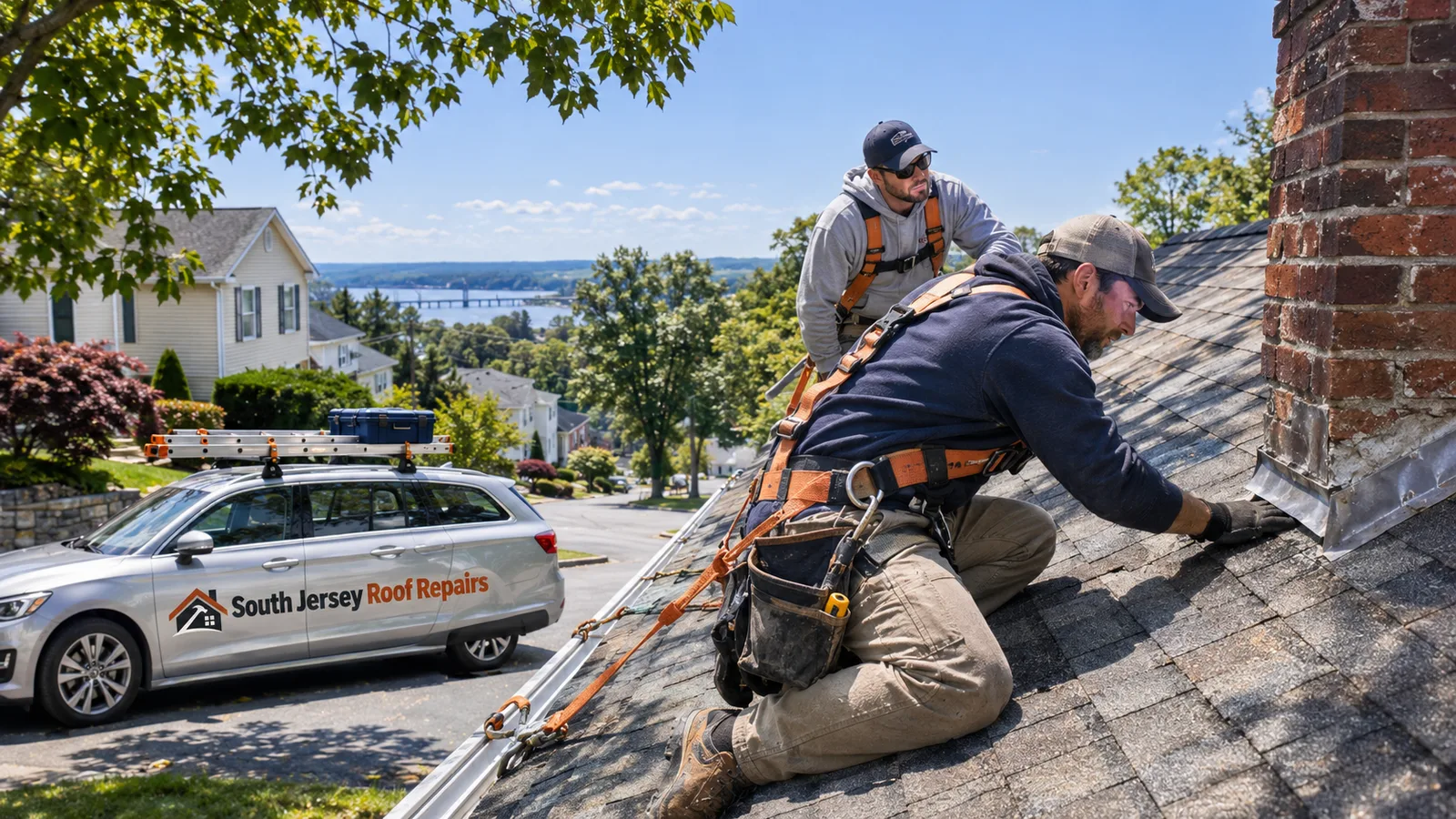
Roof leak repair in South Jersey starts with finding where water enters, which may be some distance from the ceiling stain. Water can travel along roof decking, rafters, or a pipe before dripping indoors. Replacing the shingle nearest the stain may leave the actual opening untouched. A roofer checks the roof covering, penetrations, flashing, and accessible attic conditions before recommending the repair.
Wind-driven rain during coastal storms can expose openings that stay dry in ordinary rainfall. Winter freeze-thaw cycles can also expose weaknesses at roof edges and flashing joints. Along the Jersey Shore, salt exposure makes corrosion worth checking on metal flashing and exposed fasteners. These conditions help explain why a leak may appear only during certain weather.
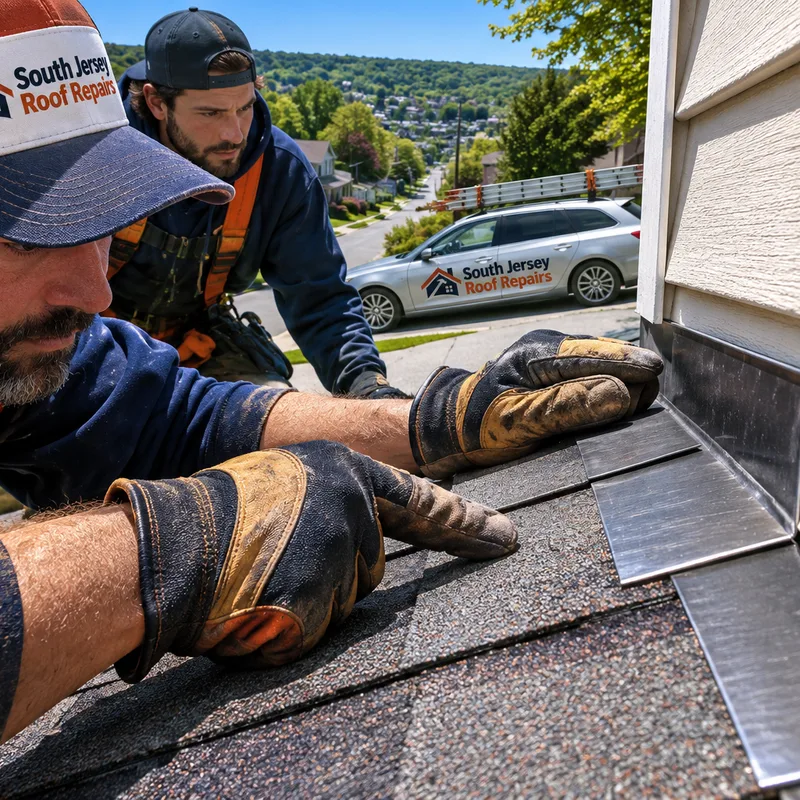
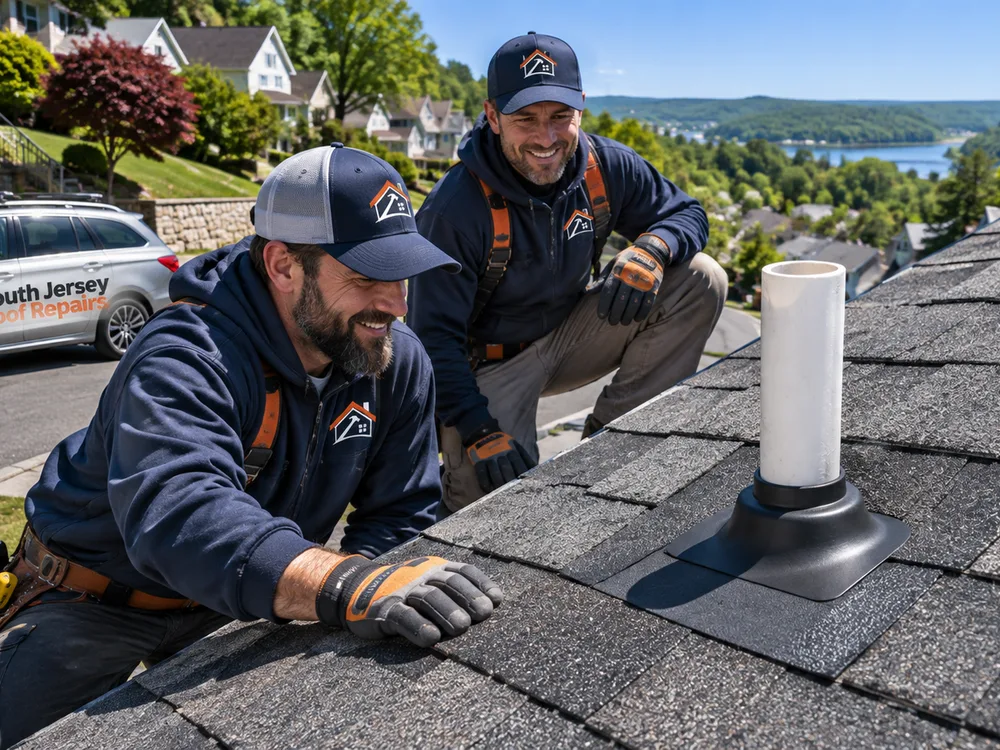
For shingle roof leak repair, the contractor looks for lifted tabs, creased or missing shingles, exposed nail heads, and damaged underlayment. At chimneys and roof-to-wall joints, step flashing and counterflashing deserve close attention. Pipe boots can crack around vent pipes even when the surrounding shingles remain usable. Roof valleys need a clear drainage path and intact materials where runoff concentrates.
A localized repair may involve replacing damaged shingles, renewing a pipe boot, or rebuilding a flashing detail. Soft decking changes the scope because replacement material needs a sound base. Widespread brittle shingles or repeated leaks in separate areas may call for a discussion about roof replacement and installation rather than another isolated patch.
When comparing local roof companies around South Jersey, ask how the contractor will identify the entry point and explain the proposed repair.
South Jersey Roof Repairs is a referral service for homeowners seeking local roofing help. If a contractor is available in your area, you can ask about an assessment. The contractor evaluates the work, provides the quote, and you decide whether to proceed.
A call is a starting point for checking local roof leak repair options. Contractor availability varies by ZIP code; if someone is available, you can discuss the leak directly.
A damaged shingle is only part of the check. The roofer should consider nail placement, underlayment condition, and whether water has softened the decking before closing the repair.
Roof flashing leak repair addresses how metal pieces overlap with shingles, siding, and masonry. Surface sealant may have a limited role, but it does not replace a correctly assembled drainage detail.
You receive the quote from the contractor and can ask which materials will be removed, what will be replaced, and how concealed damage will be handled. The decision to authorize work stays with you.
Have your property ZIP code ready when you call. If a contractor is available, describe when and where the leak appears.
Arrange the assessment directly with the contractor. Useful clues include when the leak appears, whether wind direction matters, and whether a stain has grown. The roofer may examine accessible attic areas as well as the roof, subject to safe access and conditions.
The contractor explains the suspected entry point and repair scope. Ask whether the work includes shingles, flashing, underlayment, or decking, and how any concealed deterioration would affect the quote. You choose whether to approve the work.
During the work, damaged materials are removed as needed, exposed decking is checked, and replacement materials are integrated with the existing roof. The contractor should explain how the repair will be checked and what interior moisture damage needs separate attention.
It does not identify the roof opening. A roof assessment can help trace the source; ask an available contractor how they would investigate the leak.
You can arrange an assessment while the roof is dry. Water stains, damaged materials, and attic moisture marks can help a contractor investigate between storms. Photos taken safely indoors during rainfall can show the drip location and intensity. The contractor decides whether additional testing is appropriate.
A repair may still be possible, but the replacement shingles may look different. The contractor needs to consider shingle dimensions, exposure, thickness, and compatibility as well as color. Ask what the finished area is likely to look like before approving a localized shingle roof leak repair.
A stain near a chimney does not prove that flashing is the only problem. Deteriorated mortar, a damaged chimney crown, or other masonry defects can also admit water. Ask the roofer which evidence points to the roof joint and whether a separate masonry assessment is appropriate.
Keep people away from a bulging ceiling and avoid touching wet electrical fixtures or switches. Stay off the roof and out of unstable attic areas. Electrical hazards need attention from an appropriate electrical professional, while the roofing contractor addresses the water entry. Discuss safe access before anyone examines the affected area.
Roof repair addresses the source of water entry; damaged interior materials may need separate drying or repair. Wet insulation and concealed dampness deserve attention even after dripping stops. Ask the contractor what moisture damage was visible and which interior work is outside the roofing scope.
A written quote should identify the repair area, proposed materials, removal work, and how unexpected decking damage will be handled. Ask about debris removal, protection of nearby property, payment terms, and any warranty terms the contractor offers. The contractor provides the quote, and you decide whether its scope addresses your concerns.
Water entering through shingles, flashing, or a roof penetration needs a repair aimed at the source. If a contractor serves your ZIP code and is available, ask about an assessment and a quote before deciding how to proceed.